
Could Distributed Peer Review Better Decide Grant Funding?
The landscape of academic grant funding is notoriously competitive and plagued by lengthy, bureaucratic processes, exacerbated by difficulties in finding willing reviewers. Distributed […]
The necessity of rigorous if uninspiring academic writing is perhaps best illustrated with the story of a prominent 18th-century intellectual named Franz Anton Mesmer. He believed that illnesses were caused by blockages that interfered with the healthy flow of magnetic fluid through the body.

Over the years, Australia has had a confused relationship with the impact agenda, with much of this grounded in the vagaries of government. When the idea of a national exercise to evaluate research was first touted in the form of the Research Quality Framework, the focus was to be on both quality and…

Using bibliometrics to measure and assess researchers has become increasingly common, but does implementing these policies therefore devalue the metrics they are based on? Here researchers present evidence from a study of Italian researchers revealing how the introduction of bibliometric targets has changed the way Italian academics cite and use the work of their colleagues.

While you might think that the essentials of human behavior are pretty similar, one of the things Michie quickly tells interviewer Dave Edmonds in this Social Science Bites podcast is that it can be unwise to jump to conclusions when studying behavior (or trying to change it).

If you missed the broadcast of the new BBC/FX version of A Christmas Carol, it is well worth tracking down on a streaming service. While the production is occasionally bonkers, it brilliantly captures Charles Dickens’s passionate anger about social injustice in Victorian Britain.
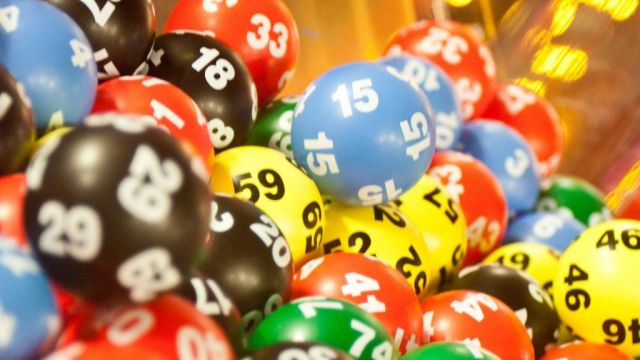
Peer review is integral to the award of funds for academic research. Lambros Roumbanis argues that randomly awarding research funding via lotteries presents a more rational, efficient and most importantly unbiased means of distributing research funding.
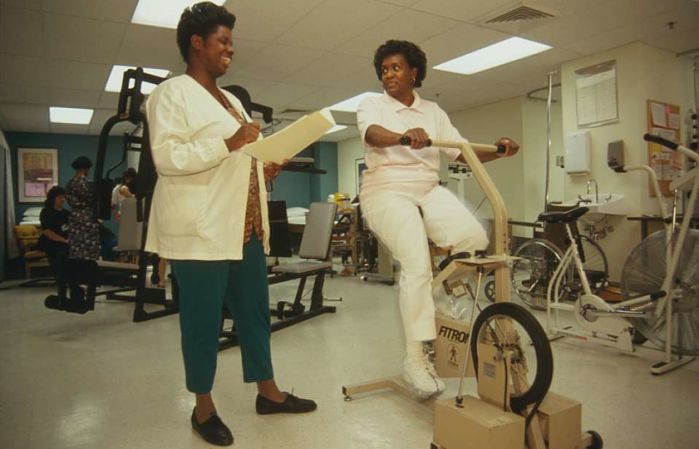
Since its debut in the Canadian Journal of Occupational Therapy in 1990, the Canadian Occupational Performance Measure has been adopted by, more than 40 countries across healthcare professions, and as such is the most widely used occupational therapy measure in the world. The article has received 490 citations according to CrossRef and has been cited, according to Google Scholar, 843 times.
Standing in a powerful pose increases your testosterone levels. Ten thousand hours of practice leads to mastery and high achievement. Eating out of large bowls encourages overeating. These are just a few examples of big ideas that have formed the basis of popular science books, only to be overturned by further research or a closer reading of the evidence…

Euan Adie, the founder of Altmetric and later of Overton, discusses the reasons the led to Overton’s focus on showing researchers how […] Here’s a couple of quick questions for you. What is the smallest of the eight discipline-based directorates at the United States’ National […] Sage’s 10-Year Impact Awards recognize academic papers appearing in Sage-published journals that have achieved lasting impact. The winning papers are the most […] I was adding some final flourishes on the topic of ‘iatrocracy’ to my forthcoming book with Natewindé Sawadogo – Sickness and Social […] How is AI changing the shape and space of higher education? Critical thinking continues to rank highly among key skills and attributes […] My colleagues and I recently spoke with a group of talented, interesting students who just completed their first year of college about […]
EXPLORE
Impact

Quick Insight: Euan Adie on Getting Academics Credit for Their Impact
READ MORE

NSF’s Embattled SBE Directorate Shown as Agency’s Policy Heavyweight
READ MORE

Sage’s 10-Year Impact Awards Capture Longer-Term Significance
READ MORE
Innovation

AI and ‘Iatrocracy’ – A Cautionary Tale
READ MORE

The Critical Student: How GenAI Reshapes Critical Skills and Higher Education’s Role Preparing Students For It
READ MORE

AI Doesn’t Drive Student Cheating. It Just Hitches a Ride
READ MORE