


Could Distributed Peer Review Better Decide Grant Funding?
The landscape of academic grant funding is notoriously competitive and plagued by lengthy, bureaucratic processes, exacerbated by difficulties in finding willing reviewers. Distributed […]

Most early career researchers receive little to no training on how to peer review, and it’s not always easy to find consistent or helpful guidance. Here, during Peer Review Week, Katrina Newitt offers some helpful advice on how to get started.
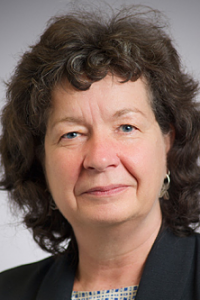
Sociologist Wendy Larner, provost at Victoria University of Wellington, began her three-year term as president of New Zealand’s Royal Society Te Apārangi […]
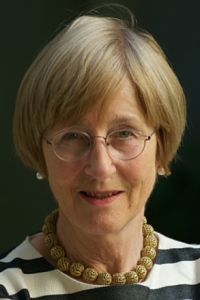
The British Academy is honoring political journalists Zeinab Badawi and Dame Frances Cairncross among a number of individuals awarded for their services to the humanities and social sciences.
The US Senate approved a “minibus” appropriations bill that combined the FY19 Defense and Labor-Health and Human Services-Education Appropriations Acts. The Senate also cleared for the president’s signature the FY19 Defense Authorization Act, and the measure was signed into law on August 13. But the bill that includes NSF funding has gone nowhere.

As Brexit Britain appears headed straight for a chaotic exit from the European Union, its universities are raising questions about their future with growing alarm. The consequences which post-Brexit nationalism will have for universities, students, and scholars are hardly being discussed at all.
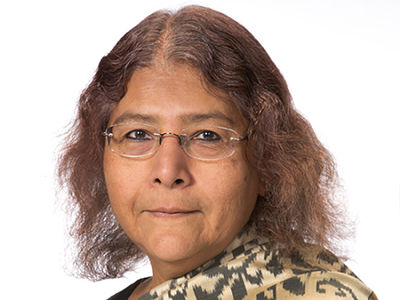
Sheila Sen Jasanoff, the founder and director of Harvard University’s Program on Science, Technology and Society, will receive the Social Science Research Council’s highest honor, the Albert O. Hirschman Prize, and deliver the Hirschman lecture — “Theory, Critique, and Discipline in a Post-Truth Age” — on November 30
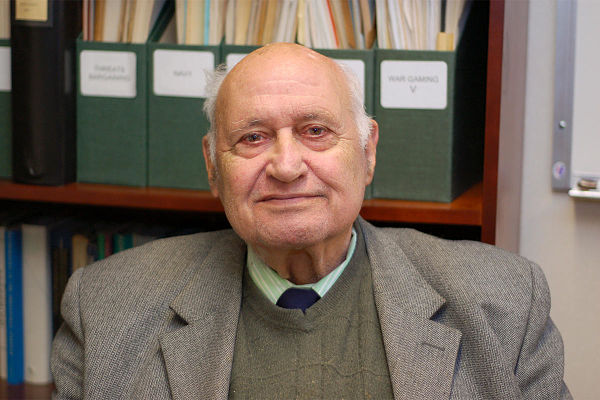
Martin Shubik, an economist, game theorist and political scientist whose sense of persepctive, and of humor, infused his voluminous work on complex and vexing questions, has died at age 92. He died August 22 at his home in Branford, Connecticut; Shubik had been on the faculty at nearby Yale University since 1963.
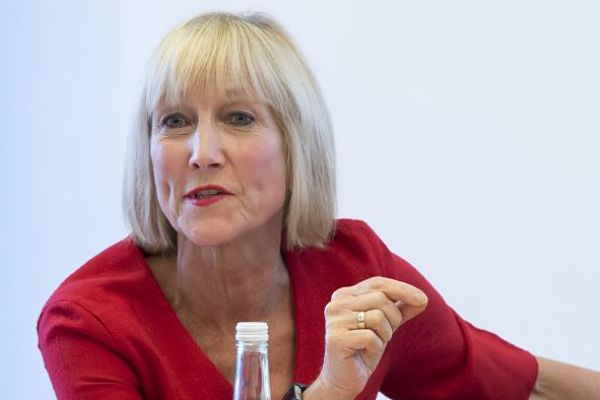
One thing has become clear to sociologist Diane Reay across her research – “It’s primarily working-class children who turn out to be losers in the educational system.” Whether it’s through the worst-funded schools, least-qualified teachers, most-temporary teaching arrangements or narrowest curricula, students from working class backgrounds in the United Kingdom (and the United States) draw the shortest educational straws.
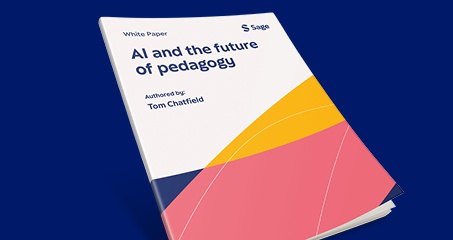
When people trust science, they can make better decisions, follow helpful rules and work together on big problems like health, climate change […] Do you know a social or behavioral science researcher whose work resonates across disciplines and which has made a significant impact in […] Please note: this contest has now closed. The winner will be contacted in due course. This November, Sage and Overton invite you to share the unexpected […] The latest generation of artificial intelligence models is sharper and smoother, producing polished text with fewer errors and hallucinations. As a philosophy […] In a new white paper by Tom Chatfield, the philosopher of tech and critical thinking outlines a practical roadmap for integrating artificial intelligence into […] Distance learning far precedes the digital age. Before online courses, people relied on print materials (and later radio and other technologies) to […]
EXPLORE
Impact

There Is a Cost to Being Honest About Science
READ MORE

Outstanding Social and Behavioral Scientists Sought for Sage-CASBS Award
READ MORE
![Share Your Most Surprising Policy Citation for Chance to Win $500 [Closed]](https://www.socialsciencespace.com/wp-content/themes/conferpress/images/default_thumbnail-new-border.jpg "Share Your Most Surprising Policy Citation for Chance to Win $500 [Closed]")
Share Your Most Surprising Policy Citation for Chance to Win $500 [Closed]
READ MORE
Innovation

An AI Authorship Protocol Aims to Sharpen a Sometimes-Fuzzy Line
READ MORE

A Box Unlocked, Not A Box Ticked: Tom Chatfield on AI and Pedagogy
READ MORE

AI Gaming of Some Online Courses Threatens Their Credibility
READ MORE