
Could Distributed Peer Review Better Decide Grant Funding?
The landscape of academic grant funding is notoriously competitive and plagued by lengthy, bureaucratic processes, exacerbated by difficulties in finding willing reviewers. Distributed […]
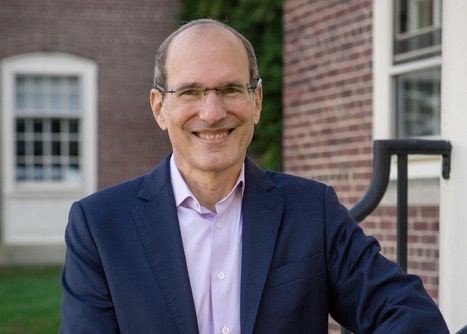
Earlier this month, David Nirenberg — a professor of medieval history who had been dean of the Divinity School at the University of Chicago — became the the director of the Institute for Advanced Study to come from the humanities.

A Canadian research team observed a profound ripple effect where reduced productivity from increased workload due to the pandemic impacted researchers’ progress.

The National Science Foundation in committing $38 million to establish a new platform to wrangle the ever-increasing amount of social and behavioral […]

Making self-identification an everyday practice is one of trans activism’s most visible recent victories, particularly on campuses, and language is at the center of that change.
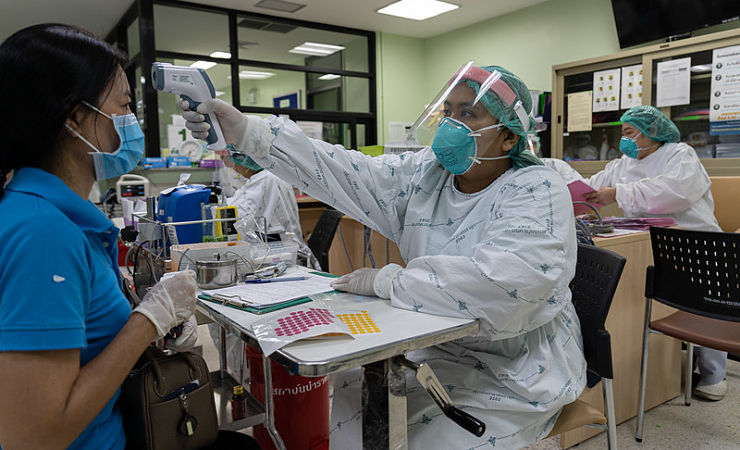
The COVID-19 pandemic has surfaced the potential and risks of linked real word datasets to accelerate and produce new improvements in public health. In this post, the authors outline the opportunities and challenges of using real world data as part of the ‘Unlocking data to inform public health policy and practice’ project.
Associate professor Siouxsie Wiles and professor Shaun Hendy have become well known for their work explaining the science behind COVID-19 and guiding the public and government response. Is their home institution doing enough to protect them from bad actors?
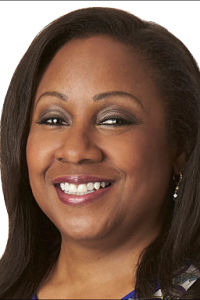
Engineer and psychologist Carlotta M. Arthur, currently director of the Henry Luce Foundation’s Clare Boothe Luce Program for Women in STEM, has been named the new executive director of the Division of Behavioral and Social Sciences and Education at America’s National Academies of Sciences, Engineering, and Medicine.
Cst Philip E. Rubin, whose extensive resume includes leadership roles at the National Science Foundation and the Office of Science and Technology Policy, is the new president of the board of the Federation of Associations in Behavioral and Brain Sciences.

The Royal Swedish Academy of Sciences has awarded this year’s Nobel Prize in Economic Sciences to the American economists Robert E. Hall […] Four Americans working in the social and behavioral sciences are among the 20 people named MacArthur Fellows this year. Recipients may be […] Euan Adie, the founder of Altmetric and later of Overton, discusses the reasons the led to Overton’s focus on showing researchers how […] The following is an adapted extract from The Cultural Industries, fifth edition, by David Hesmondhalgh. The increasing presence of information technology (IT) […] Developers of AI data centers have a public trust problem. According to multiple surveys, a majority of Americans say they would oppose […] I was adding some final flourishes on the topic of ‘iatrocracy’ to my forthcoming book with Natewindé Sawadogo – Sickness and Social […]
EXPLORE
Impact
Economic Peaks, Troughs and This Year’s Nobelists in Economics
READ MORE

Four From Social Science World Receive 2026 MacArthur Fellowships
READ MORE

Quick Insight: Euan Adie on Getting Academics Credit for Their Impact
READ MORE
Innovation

IT Giants and Their Operations: Should We Be Concerned?
READ MORE

What We Miss When We Study Public Trust with Surveys Alone
READ MORE

AI and ‘Iatrocracy’ – A Cautionary Tale
READ MORE