


Could Distributed Peer Review Better Decide Grant Funding?
The landscape of academic grant funding is notoriously competitive and plagued by lengthy, bureaucratic processes, exacerbated by difficulties in finding willing reviewers. Distributed […]
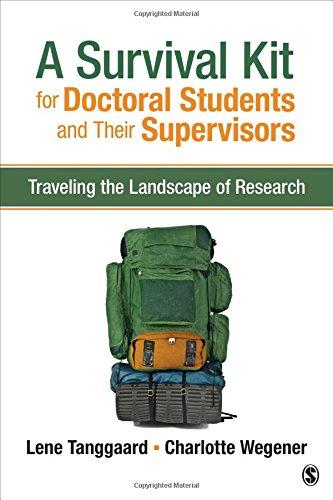
In ‘A Survival Kit for Doctoral Students and Their Supervisors: Traveling the Landscape of Research,’ Lene Tanggaard and Charlotte Wegener offer a hands-on guide for both students and supervisors that seeks to engage with the ‘actual and messy practices of doctoral training,’ says Sroyon Mukherjee.
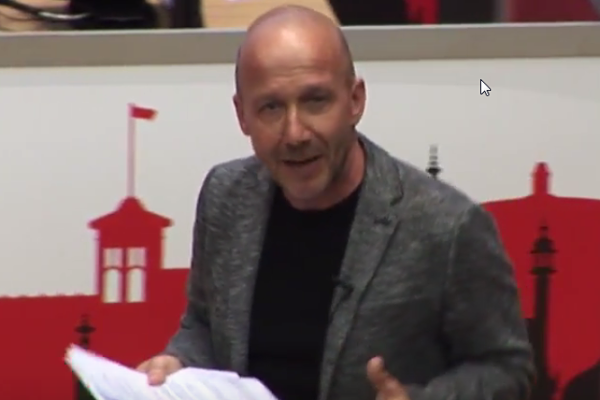
It’s not easy being an early career researcher! Establishing your professional identity, developing your independence as a researcher, teaching, competing for grants, coping with increasing levels of administration and – oh yes – developing your ‘output’ – that dreadful word so often used to describe the writing born of your research.

If you’ve never done a peer review before, the process might seem a little daunting. In this post from Publons, peer-review experts were asked for the advice on how best to proceed, and their top 12 tips are presented here.

The Federation of Associations in Behavioral & Brain Sciences has named six winners of its 2017 Early Career Impact Award. The award goes to early career scientists of FABBS member societies who have made major contributions to the sciences of mind, brain, and behavior, and who are within the 10 years of having received their PhD.

This marks the 20th year that the Horowitz Foundation for Social Policy has been passing out grants to social scientists, and the deadline to apply for this year’s round of $7,500 grants is December 1.
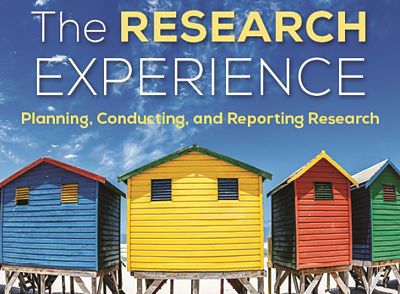
New technology has, and is, changing a lot of the mechanics of social and behavioral science research, but how much is the underlying enterprise itself changing as a result? This is a key question Ann Sloan Devlin, author of the newly released ‘The Research Experience: Planning, Conducting, and Reporting Research,’ addresses in this interview.

Shamit Saggar from the University of Essex has been appointed to be the new head of the UK’s Campaign for Social Science.

So if markets are truly good for English higher education, as many seem to think, should we follow that train of thought to its logical conclusions?

The Royal Swedish Academy of Sciences has awarded this year’s Nobel Prize in Economic Sciences to the American economists Robert E. Hall […] Four Americans working in the social and behavioral sciences are among the 20 people named MacArthur Fellows this year. Recipients may be […] Euan Adie, the founder of Altmetric and later of Overton, discusses the reasons the led to Overton’s focus on showing researchers how […] The following is an adapted extract from The Cultural Industries, fifth edition, by David Hesmondhalgh. The increasing presence of information technology (IT) […] Developers of AI data centers have a public trust problem. According to multiple surveys, a majority of Americans say they would oppose […] I was adding some final flourishes on the topic of ‘iatrocracy’ to my forthcoming book with Natewindé Sawadogo – Sickness and Social […]
EXPLORE
Impact
Economic Peaks, Troughs and This Year’s Nobelists in Economics
READ MORE
Four From Social Science World Receive 2026 MacArthur Fellowships
READ MORE
Quick Insight: Euan Adie on Getting Academics Credit for Their Impact
READ MORE
Innovation

IT Giants and Their Operations: Should We Be Concerned?
READ MORE

What We Miss When We Study Public Trust with Surveys Alone
READ MORE

AI and ‘Iatrocracy’ – A Cautionary Tale
READ MORE