

Could Distributed Peer Review Better Decide Grant Funding?
The landscape of academic grant funding is notoriously competitive and plagued by lengthy, bureaucratic processes, exacerbated by difficulties in finding willing reviewers. Distributed […]

Very, very little science makes its way to the public eye, and an even smaller amount of that makes an impact. Entrepreneurial scientist Robert Seigel is offering a way around the gatekeepers of knowledge.
After Big Data, one of the most controversial topics in statistics workshop is the problem of reproducibility in scientific research.

In the first of a series of excerpts from a just released report summarizing 2013’s International Year of Statistics’ London conference, we look at one of the down sides of Big Data.

The Population Association of America has joined the family of Social Science Space partners this summer, and to mark that we spoke with the president of the PAA, Johns Hopkins economist Robert Moffitt.

The latest attempt to show a machine can pass itself off as human relied a little too heavily on letter of Turing’s test and not its spirit.

A natural scientist reflects on a conference that focused on bringing natural and social scientists into a a shared, and continuing, conversation.
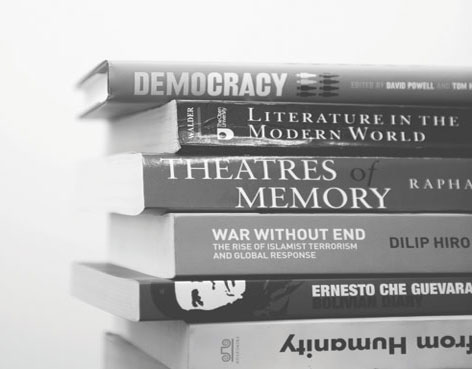
Beyond the funding fears experienced by the social science, the humanities have those kinds of worries and their cyclic existential crisis.

There is a great need to understand the role of urbanisation in society and respond effectively, particularly given global economic and social insecurity, argues Mike Goldsmith. But the increasing specialization within disciplines means that such vital dialogues on cities are becoming difficult. An interdisciplinary effort is needed to bring the study of cities, their politics, policies and problems back into the mainstream of social science and to do it on a genuinely comparative basis.

Euan Adie, the founder of Altmetric and later of Overton, discusses the reasons the led to Overton’s focus on showing researchers how […] Here’s a couple of quick questions for you. What is the smallest of the eight discipline-based directorates at the United States’ National […] Sage’s 10-Year Impact Awards recognize academic papers appearing in Sage-published journals that have achieved lasting impact. The winning papers are the most […] I was adding some final flourishes on the topic of ‘iatrocracy’ to my forthcoming book with Natewindé Sawadogo – Sickness and Social […] How is AI changing the shape and space of higher education? Critical thinking continues to rank highly among key skills and attributes […] My colleagues and I recently spoke with a group of talented, interesting students who just completed their first year of college about […]
EXPLORE
Impact

Quick Insight: Euan Adie on Getting Academics Credit for Their Impact
READ MORE

NSF’s Embattled SBE Directorate Shown as Agency’s Policy Heavyweight
READ MORE

Sage’s 10-Year Impact Awards Capture Longer-Term Significance
READ MORE
Innovation

AI and ‘Iatrocracy’ – A Cautionary Tale
READ MORE

The Critical Student: How GenAI Reshapes Critical Skills and Higher Education’s Role Preparing Students For It
READ MORE

AI Doesn’t Drive Student Cheating. It Just Hitches a Ride
READ MORE