

Could Distributed Peer Review Better Decide Grant Funding?
The landscape of academic grant funding is notoriously competitive and plagued by lengthy, bureaucratic processes, exacerbated by difficulties in finding willing reviewers. Distributed […]
How well do sociology departments in the UK teach sociology that originated in the UK? Asking that surprisingly hard question may produce usable insights for academic Britain, argues our Robert Dingwall.
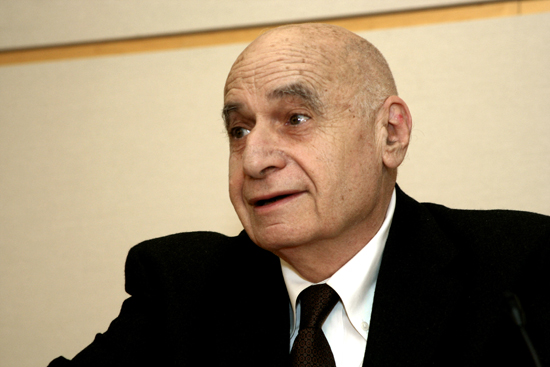
Peter Berger, a sociologist of religion, unlikely culture warrior and founder of the Institute on Culture, Religion, and World Affairs on Boston University, has died at age 88.
In a budget year where the U.S. Congress is far behind where it would usually be in appropriating decisions, the social, behavioral and economic directorate at the National Science Foundation is seeing normal funding, while the Census Bureau is feeling some pressure.

Fire safety is not just an issue for engineers. People build buildings, people live in buildings, and people use (and abuse) buildings. That creates a need for social and behavioral work to accompany every nail driven.

The Social Security Administration has shown its ability to cut monthly checks for elderly, survivors and disabled. So why not for kids via their parents?
On May 5, Congress finally cleared the fiscal year 2017 spending bill package, which included increases for the National Institutes of Health and flat funding for the National Science Foundation. Weeks later, President Trump unveiled his fiscal year 2018 budget, which includes sweeping cuts to NIH, NSF and federally-funded science research and education.
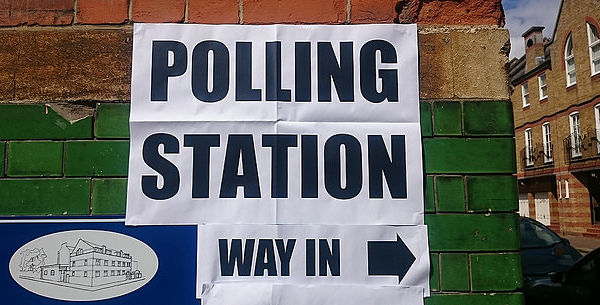
For social scientists, there must be a concern that a generation’s worth of accumulated empirical evidence on effective leadership has made so little impact on the candidates in the upcoming General Election in the United Kingdom.
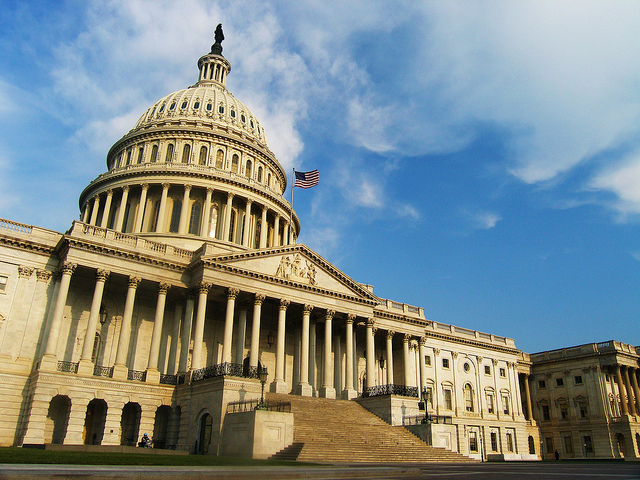
Topics this month include a look at Congress clearing the Fiscal Year 2017 budget- and rejecting the Trump-proposed cuts to NSF and NIH funding, and what’s next for the science community after the heralded March for Science.

Jürgen Habermas, a globally known social theorist whose explorations of democracy, validity and communication have gained new prominence in the current moment, […] People often see science as a world apart: cool, rational and untouched by persuasion or performance. In this view, scientists simply discover […] “Research impact” means different things to different people. Some refer broadly to how science changes behaviors, beliefs, or practices outside academic institutions. […] David Canter considers informal places where people socialize, suggesting they’re an arena ChatGPT and other LLMs can’no’t replicate. As someone who lives […] It’s become cliche since Clive Humbly coined it in 2006, but data is indeed the new oil. It’s a mantra repeated by […] In September 2025, The Guardian reported about a lawyer in Australia having faced sanctions due to false citations. These citations were not […]
EXPLORE
Impact

Jürgen Habermas, 1929-2026: Exponent of the Public Sphere
READ MORE

Scientists Should Keep in Mind It’s Called the ‘Marketplace of Ideas’ for a Reason
READ MORE

Survey Finds Social Scientists Feel Unsupported in Seeking Societal Impact
READ MORE
Innovation

Reaching Parts to Which AI Has No Access
READ MORE

Andrea Medina-Smith on Making Research Data More FAIR
READ MORE

A Status Check on Hallucinated Case Law Incidents
READ MORE