




Could Distributed Peer Review Better Decide Grant Funding?
The landscape of academic grant funding is notoriously competitive and plagued by lengthy, bureaucratic processes, exacerbated by difficulties in finding willing reviewers. Distributed […]

The American presidential campaign season, official and unofficial, seems essentially endless. But as the US enters the homestretch for 2016, Howard Silver wonders how much all this sound and fury really matters to voters

We often use the metaphor of a war to describe the human struggle against disease. This is a very unhelpful way of thinking, because it generates the sort of hubris exemplified by the Chan Zuckerberg program.
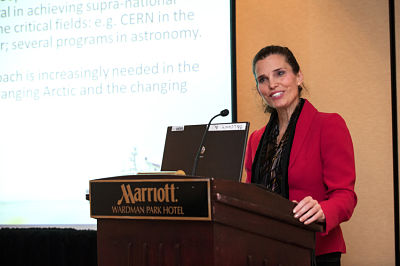
Canada’s first-ever Minister of Science spends more than a billion dollars on science projects in a busy week.

Jean Stockard and Tim Wood looked at the U.S. Department of Education’s What Works Clearinghouse and asked a very similar question – does this work? They found that the answer is often no, but that doesn’t have to be the case.

Sociologist Sharit Kumar Bhowmik, best known for his work on informal labor and most specifically on street vendors in India, has died.
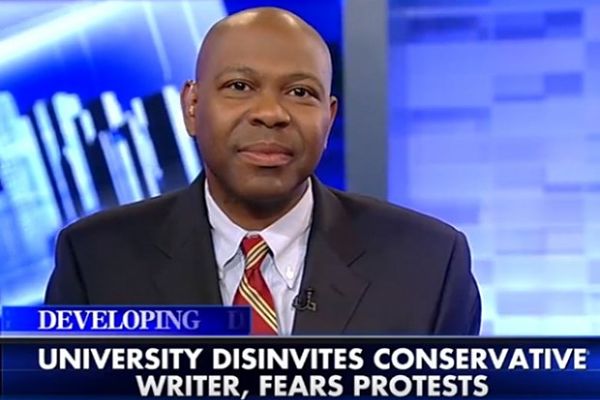
Pushing for a lecture to be cancelled, or disrupted so that it is either postponed on health and safety grounds, or goes ahead but speakers are unable to be heard, is censorship, argues Jo Williams, and it is to the detriment of all within universities and wider society alike.

In an effort to prevent ‘gaming’ the REF, new recommendation from Lord Stern cuts down on the freedom of academics to move from institution as they see fit. Is the cure worse than the disease?

In the wake of the government’s ‘Action Against Hate’ paper, new reports from Britain’s Equality and Human Rights Commission look at the causes of prejudice and unlawful behavior and at the causes and motivations of hate crime.

The Royal Swedish Academy of Sciences has awarded this year’s Nobel Prize in Economic Sciences to the American economists Robert E. Hall […] Four Americans working in the social and behavioral sciences are among the 20 people named MacArthur Fellows this year. Recipients may be […] Euan Adie, the founder of Altmetric and later of Overton, discusses the reasons the led to Overton’s focus on showing researchers how […] The following is an adapted extract from The Cultural Industries, fifth edition, by David Hesmondhalgh. The increasing presence of information technology (IT) […] Developers of AI data centers have a public trust problem. According to multiple surveys, a majority of Americans say they would oppose […] I was adding some final flourishes on the topic of ‘iatrocracy’ to my forthcoming book with Natewindé Sawadogo – Sickness and Social […]
EXPLORE
Impact
Economic Peaks, Troughs and This Year’s Nobelists in Economics
READ MORE

Four From Social Science World Receive 2026 MacArthur Fellowships
READ MORE

Quick Insight: Euan Adie on Getting Academics Credit for Their Impact
READ MORE
Innovation
IT Giants and Their Operations: Should We Be Concerned?
READ MORE

What We Miss When We Study Public Trust with Surveys Alone
READ MORE

AI and ‘Iatrocracy’ – A Cautionary Tale
READ MORE