

Could Distributed Peer Review Better Decide Grant Funding?
The landscape of academic grant funding is notoriously competitive and plagued by lengthy, bureaucratic processes, exacerbated by difficulties in finding willing reviewers. Distributed […]
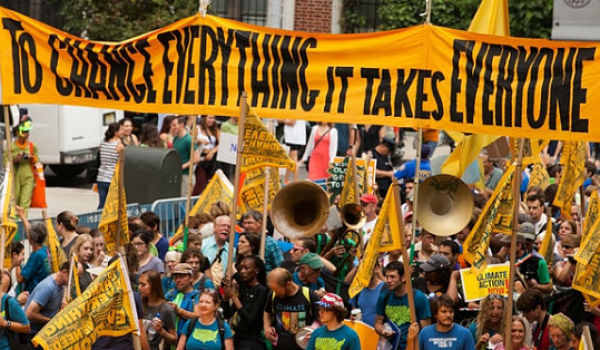
A new analysis published in the journal Energy Research & Social Science finds that funding for social science climate-change research is not only unhealthy but downright anemic at roughly 10 percent of the total spend. Meanwhile, total spending on climate-change research in total, regardless of discipline, comes to just 5 percent of all competitive research grants funded between 1950 and 2018.

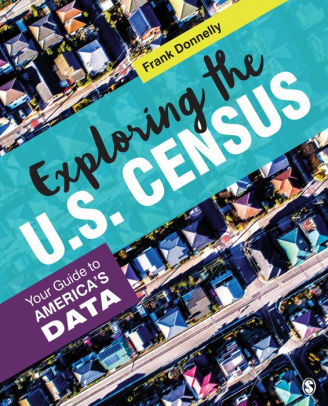
Geographer Frank Donnelly notes that census geography and maps are not automatically reliable – they can be used to intentionally skew research findings.

While you might think that the essentials of human behavior are pretty similar, one of the things Michie quickly tells interviewer Dave Edmonds in this Social Science Bites podcast is that it can be unwise to jump to conclusions when studying behavior (or trying to change it).

Arizona State University electrical engineer Sethuraman “Panch” Panchanathan is the likely nominee to replace France Córdova as director of the National Science Foundation once Córdova’s six-year appointment ends next year

Ideally, advocates say, government-sponsored scientists should follow their research where it leads, talk about it honestly and freely with the press and the public, and release unaltered information about their findings. A bill that’s currently stuck in committee would help guarantee that.

Over the last three decades randomized trials have become an increasingly popular way of testing interventions designed to address developmental challenges. But do RCTs generate reliable results – or even retard progress?

Universities in effect, argues our Robert Dingwall, are asked to exercise all the responsibilities of parents and to act as a secular equivalent of the medieval church as the conscience of the nation.
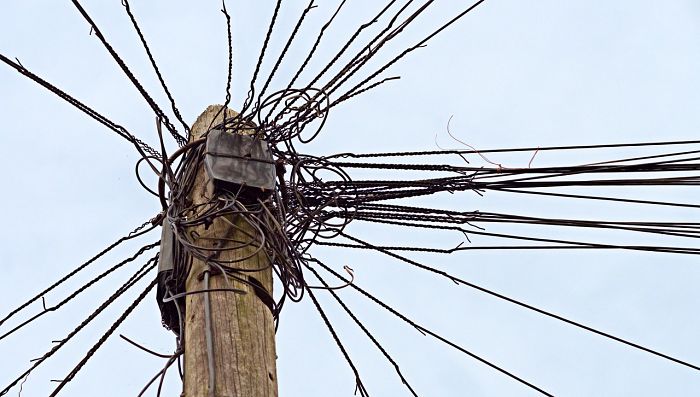
Here’s a clear, scientific reason drawn from the field of complexity economics to combat rising inequality: good business models that serve many people are becoming less profitable. Solid entrepreneurial ideas that would benefit everyone get passed over when there are easier opportunities to make money by catering to a few individuals with a whole lot of dollars to spend.

The Royal Swedish Academy of Sciences has awarded this year’s Nobel Prize in Economic Sciences to the American economists Robert E. Hall […] Four Americans working in the social and behavioral sciences are among the 20 people named MacArthur Fellows this year. Recipients may be […] Euan Adie, the founder of Altmetric and later of Overton, discusses the reasons the led to Overton’s focus on showing researchers how […] The following is an adapted extract from The Cultural Industries, fifth edition, by David Hesmondhalgh. The increasing presence of information technology (IT) […] Developers of AI data centers have a public trust problem. According to multiple surveys, a majority of Americans say they would oppose […] I was adding some final flourishes on the topic of ‘iatrocracy’ to my forthcoming book with Natewindé Sawadogo – Sickness and Social […]
EXPLORE
Impact
Economic Peaks, Troughs and This Year’s Nobelists in Economics
READ MORE

Four From Social Science World Receive 2026 MacArthur Fellowships
READ MORE

Quick Insight: Euan Adie on Getting Academics Credit for Their Impact
READ MORE
Innovation

IT Giants and Their Operations: Should We Be Concerned?
READ MORE

What We Miss When We Study Public Trust with Surveys Alone
READ MORE

AI and ‘Iatrocracy’ – A Cautionary Tale
READ MORE