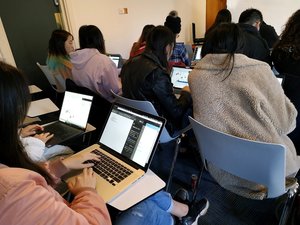

Could Distributed Peer Review Better Decide Grant Funding?
The landscape of academic grant funding is notoriously competitive and plagued by lengthy, bureaucratic processes, exacerbated by difficulties in finding willing reviewers. Distributed […]
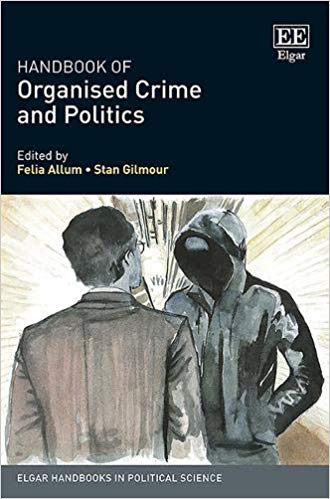
David Canter reviews The Handbook of Organised Crime and Politics. Its crucial findings drawn from across studies in Europe, the Americas and South East Asia, is that in many places politicians benefit from the support of criminal organisations. In turn those organisations require the backing of politicians.
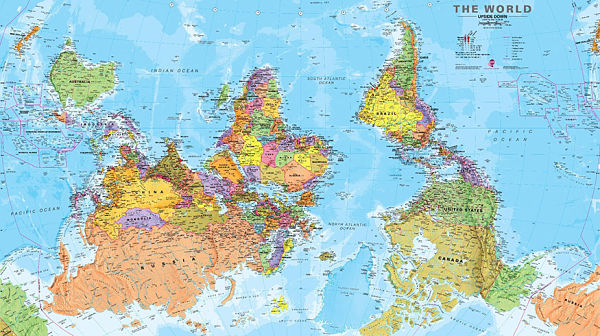
In recent years, sociology has begun a twin global and decolonial turn, marked by a series of high-profile publications that have sought to engage with sociology’s roots outside the Global Northwest. So how effective have these efforts been?
While ”corporate social responsibility’ is a staple of conversations in the business world, CSR isn’t necessarily on the lips of those outside the boardroom. That guided Janis Teruggi Page and Lawrence J. Parnell as they wrote the new intro to strategic public relations textbook. That message must have resonated, since the TAA honored the book with one of its Most Promising New Textbook Awards.

David Canter considers the possible impact on criminals of accounts of psychologists’ contributions to solving crime. “Typically, criminals do not have the intellectual abilities to study academic or true-crime to learn how to avoid detection.”

The greatest value of research is the positive impact it has on society. In this first blog post from a series looking at seminal academic articles from the SAGE Inspire collection, the editor of ‘Administrative Science Quarterly’ talks about a key 2016 piece on ‘whitening résumés.’

By participating in this promotion each individual (an “Entrant”) agrees to be bound by these Official Rules and by the decisions of […]
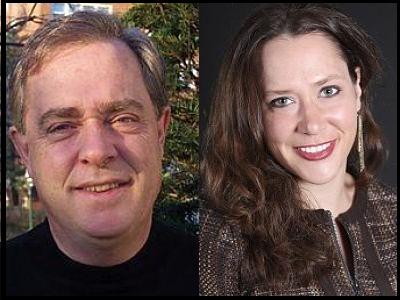
“Writing a textbook,” says Tom Heinzen, “is a foolish idea.” It’s an enormous undertaking and the rewards a few. But there are some rewards, and Heinzen and Wind Goodfriend, the authors of the new intro textbook ‘Social Psychology,’ are reaping one of them: their book received a Most Promising New Textbook Award from the Textbook & Academic Authors Association, or TAA.
What can social media platforms do after terrorist attacks? Bertie Vidgen believes that social media could actually stop more hateful content in the aftermath of a terror attack.
Euan Adie, the founder of Altmetric and later of Overton, discusses the reasons the led to Overton’s focus on showing researchers how […] Here’s a couple of quick questions for you. What is the smallest of the eight discipline-based directorates at the United States’ National […] Sage’s 10-Year Impact Awards recognize academic papers appearing in Sage-published journals that have achieved lasting impact. The winning papers are the most […] I was adding some final flourishes on the topic of ‘iatrocracy’ to my forthcoming book with Natewindé Sawadogo – Sickness and Social […] How is AI changing the shape and space of higher education? Critical thinking continues to rank highly among key skills and attributes […] My colleagues and I recently spoke with a group of talented, interesting students who just completed their first year of college about […]
EXPLORE
Impact
Quick Insight: Euan Adie on Getting Academics Credit for Their Impact
READ MORE

NSF’s Embattled SBE Directorate Shown as Agency’s Policy Heavyweight
READ MORE
Sage’s 10-Year Impact Awards Capture Longer-Term Significance
READ MORE
Innovation

AI and ‘Iatrocracy’ – A Cautionary Tale
READ MORE

The Critical Student: How GenAI Reshapes Critical Skills and Higher Education’s Role Preparing Students For It
READ MORE

AI Doesn’t Drive Student Cheating. It Just Hitches a Ride
READ MORE