Notes on a G-string: An ESRC Better Lives Essay
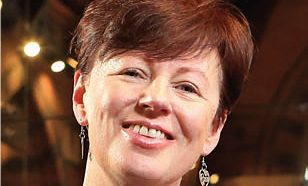
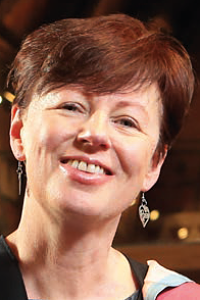
Rosie Cowan ticked numerous beats in her journalism career: politics for the Press Association, business for The Belfast Telegraph, and Ireland and later crime for the Guardian. Now a postgraduate research student in the School of Law at Queen’s University Belfast, she displays both her subject-matter expertise and writing skills in this co-winning essay from the ESRC Better Lives Writing Competition. The competition asked PhD students who have received money from the ESRC write short essays about how their research leads too better lives.
An item of underwear recently made headline news in the Republic of Ireland. The lacy thong was produced in a Cork courtroom, where a female defence barrister declared it proof that a 17-year-old rape complainant was ‘up for it’ – keen to have sex on the night in question. The jury of eight men and four women took just under an hour to acquit the 27-year-old defendant.
In Belfast, where I live, the young woman at the centre of the infamous Ulster rugby trial suffered similar indignity, when her bloodstained lingerie was passed around for jury inspection during her eight days in the witness box. The four accused were all found not guilty. A few years ago, in a Glasgow court, another young complainant was forced to hold up her pants, which bore the legend ‘Little Devil’. That defendant was convicted, but two weeks after the trial his victim took her own life.
I was a crime journalist for a London-based national newspaper before I returned to university to study law, and these were depressingly familiar stories. I covered several rape trials where defence counsel verbally savaged a complainant, almost invariably female; for although men account for around a sixth of those raped in the UK, they are even more reluctant to report it than women.
Lack of injury, failure to put up a fight, or any delay whatsoever in going to the police were treated as grounds for suspicion that the complainant was lying. Every facet of her character and behaviour was dissected in excruciating detail – her sexual history, her alcohol consumption, how she flirted with the defendant, her underwear; even though clothing rarely yields any useful forensic evidence in rape cases, which usually hinge on consent. It frequently felt like she was the one on trial, not the defendant.
It got me wondering what jurors really make of all this. Here in the UK, as in the Republic of Ireland, juries do not give reasons for their verdicts, nor are they allowed to ever reveal anything of their deliberations. Defence lawyers persist in trying to tap into false beliefs about rape that surveys confirm are widespread – yet they avoid censure for these tactics because we cannot say to what extent rape myths may have swayed any jury, how they weigh up other evidence presented in the case, and how, or if, they understand the meaning of consent and reasonable doubt.
Rape statistics are startling the world over. In England and Wales, 3.4 million (20%) of women and 631,000 (4%) of men have been raped at some point in their adult lives. According to the latest annual figures, an estimated 650,000 adults were raped or sexually assaulted in England and Wales, and around 6,000 in Northern Ireland. Yet only one in six went to the police, mainly through fear of having to endure the humiliating courtroom ordeals we read or hear about in the news.
The secrets of the jury room fascinate me, as does the psychology of how certain individuals impact group decision-making. I still remember willing Henry Fonda on when, as a child, I first saw him talk his 11 jaded fellow jurors out of convicting a teenage boy of murder in 12 Angry Men. Studying for my Master’s degree I read the work of legal academics who set up simulated jury panels and staged fictional mini-rape trials for them to observe, to examine how feelings about rape are formed and swayed by debate. This type of experiment has been carried out in England and Wales but never in Northern Ireland, and it was illuminating how forthright some participants became when discussions heated
up. Getting members of the public who are potential jurors to watch realistic courtroom scenarios, deliberate in groups and deliver verdicts, seemed a much more revealing way to study the complexities which face rape trial juries than polling or interviewing.
When I submitted my PhD proposal, which involves using mock juries to investigate attitudes to rape in Northern Ireland, the #MeToo movement was gaining global momentum, while at home the Ulster rugby trial viciously divided local opinion in a way I’d never witnessed any previous rape trial do. Its conclusion brought protestors to the streets, and it was announced that retired judge Sir John Gillen would review sexual offences trials here.
Judge Gillen has already acknowledged that prejudices about rape must be tackled. Society will not change overnight, and to formulate any policy or education programme we need evidence to demonstrate how rape myths affect jury decision-making. If my research can make even the tiniest contribution to bringing about a criminal justice system where rape complainants’ choice of underwear is no longer literally cast up as evidence against them, it will be well worth the effort.
Shortlisted and winning essays in the series:
- Playtime in the camps | Bobby Beaumont, University of Birmingham
- This land is my land | Holly Chalcraft, Durham University
- Building a better life with dementia | Elyse Couch, King’s College London
- Working relationships | Rosa Daiger von Gleichen, University of Oxford
- Parenting with mental health | Abby Dunn, University of Sussex
- Reliving trauma, relieving pain | Alessandro Massazza, University College London
- The psychology of flooding | Niall McLoughlin, University of Bath
- Becoming a diagnosis | Lauren O’Connell, University of Essex
- The illusion of eternal independence | Chloë Place, University of Sussex
- Tilting at windmills in a climate-changed world | Celia Robbins, University of Exeter
**
WINNING ESSAYS
- Notes on a G-string | Rosie Cowan, Queen’s University Belfast
- Better lives with better toilets | Ian Ross, London School of Hygiene and Tropical Medicine