
Could Distributed Peer Review Better Decide Grant Funding?
The landscape of academic grant funding is notoriously competitive and plagued by lengthy, bureaucratic processes, exacerbated by difficulties in finding willing reviewers. Distributed […]
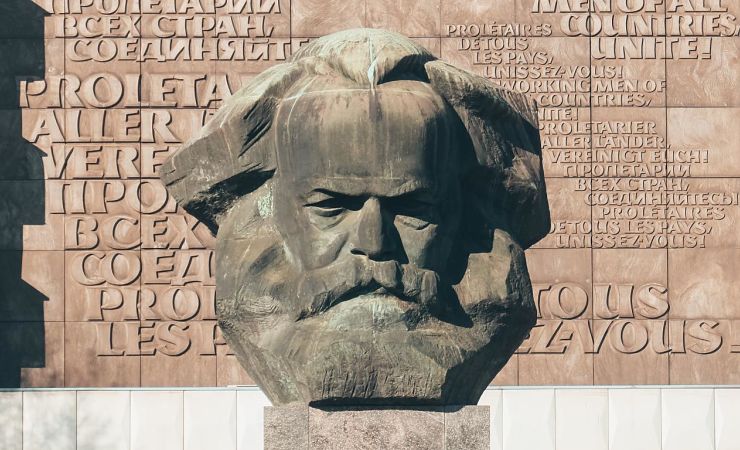
Drawing on a quantitative study of sociologists in the 20th century, Nicole Holzhauser argues that not only the content of scientific work, but also social capital has historically played a significant role in allocating recognition and power.
More artificial intelligence, less tenure and a flipped classroom are three of the trends predicted by Patricia A. Young in her new book.

SEAN, the Societal Experts Action Network, taps scientists in the social, behavioral and economic sciences to provide actionable and evidence-based recommendations to support local, state, and national responses and policies quickly.
The Association to Advance Collegiate Schools of Business has released, “Research That Matters: An Action Plan for Creating Business School Research That Positively Impacts Society.”
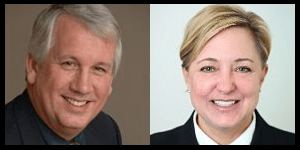
William T. Riley, the director of the Office of Behavioral and Social Science Research at the National Institutes of Health, announced he would retire at the end of December
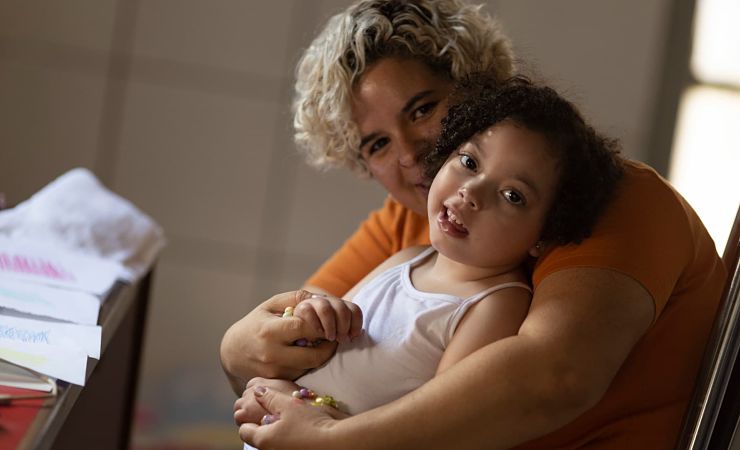
“We feel diminished,” says Alessandra Hora dos Santos. “It’s like we were lab rats. They come in nicely, collect information, collect exams on the child, and in the end we don’t know of any results. It’s like we are being used without even knowing why that is being done.”
A new blue-ribbon council convened by the United States’ National Academies of Sciences, Engineering, and Medicine aims to tackle questions about nettlesome issues like conflict of interest, measuring impact and handling retractions.
Thirty new members, including two social scientists, have been named to the science advisory body that is officially tasked with giving counsel […]


Jürgen Habermas, a globally known social theorist whose explorations of democracy, validity and communication have gained new prominence in the current moment, […] People often see science as a world apart: cool, rational and untouched by persuasion or performance. In this view, scientists simply discover […] “Research impact” means different things to different people. Some refer broadly to how science changes behaviors, beliefs, or practices outside academic institutions. […] David Canter considers informal places where people socialize, suggesting they’re an arena ChatGPT and other LLMs can’no’t replicate. As someone who lives […] It’s become cliche since Clive Humbly coined it in 2006, but data is indeed the new oil. It’s a mantra repeated by […] In September 2025, The Guardian reported about a lawyer in Australia having faced sanctions due to false citations. These citations were not […]
EXPLORE
Impact

Jürgen Habermas, 1929-2026: Exponent of the Public Sphere
READ MORE

Scientists Should Keep in Mind It’s Called the ‘Marketplace of Ideas’ for a Reason
READ MORE

Survey Finds Social Scientists Feel Unsupported in Seeking Societal Impact
READ MORE
Innovation

Reaching Parts to Which AI Has No Access
READ MORE

Andrea Medina-Smith on Making Research Data More FAIR
READ MORE

A Status Check on Hallucinated Case Law Incidents
READ MORE