


Could Distributed Peer Review Better Decide Grant Funding?
The landscape of academic grant funding is notoriously competitive and plagued by lengthy, bureaucratic processes, exacerbated by difficulties in finding willing reviewers. Distributed […]
The year 2017 turned out to be the start for mainstream behavioral economics after a leading practitioner in the field won a Nobel prize for his work. Throughout 2017, The Conversation asked experts in economics, psychology and other areas to address the power of this burgeoning field, as well as its potential for misuse. Here are some articles for your consideration.

Hamish Robertson and Joanne Travaglia argue that big data quantification is now not only a mechanism for extracting information but has become an idea with social and political power in its own right. The lack of critique of quantitative methods and their application contributes to the existing and potentially coercive power of digital information systems and their attendant methods, and enhances the potential for collateral damage.
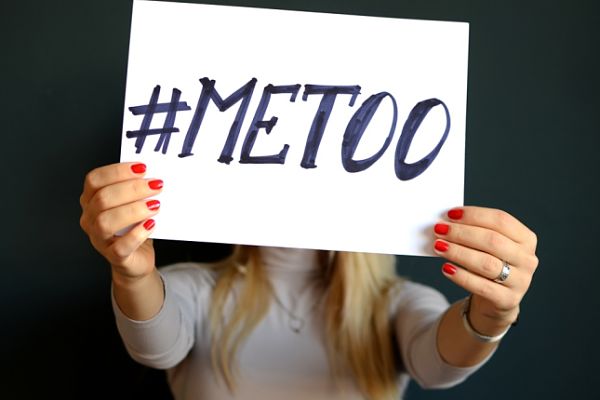
Developing an effective response to sexual harassment in the academic industry — by no means a new phenomenon, notes Robert Dingwall — requires us to consider questions about institutional memory, occupational cultures, and organizational silos, rather than badly behaved individuals.

The Division of Behavioral and Social Sciences and Education, or DBASSE, of the National Academies of Sciences, Engineering and Medicine has an idea for giving social science a little extra oomph on the policy front — giving a gift to the Hauser Policy Impact Fund.

By drawing on a plethora of psychological and sociological research, marketers subtly give us permission to buy and not to think too much, or too deeply, about why we’re buying. Not thinking all the time is a very efficient way for us to get by. It conserves energy, and allows us to live relatively easily by responding to our psychological predispositions, social norms, and general cognitive imperfections.
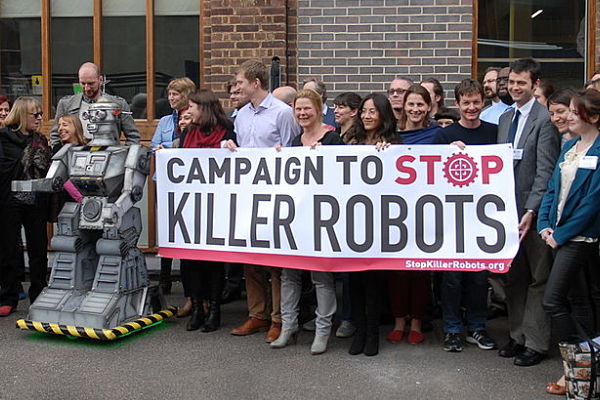
The big questions posed by our digital future sit at the intersection of technology and ethics. This is complex territory that requires input from experts in many different fields, including the social sciences, if we are to navigate it successfully. A new report makes an effort to give a first draft of that necessary input.
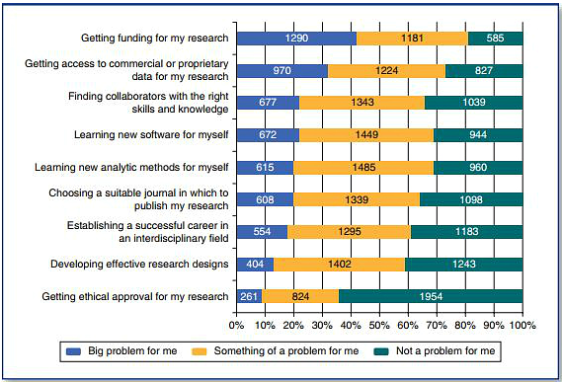
The applications of big data provide a very mixed picture about its uses and abuses, in government, academe and private industry. And while where you stand on the net impact depends, as the cliche goes, on where you sit, a panel at the recent ESRC Festival of Social Science came out qualitatively optimistic about the future.
The last few weeks have seen a growing public debate about the pay packages of Britain’s academic CEOs. The vice chancellors at a number of universities, including Birmingham, Bath, Bath Spa and others, have come under heavy pressure to justify salaries that far exceed £100,000, Oddly, all the arguments for and against this start with the assumption that universities are just like any other business.
People often see science as a world apart: cool, rational and untouched by persuasion or performance. In this view, scientists simply discover […] “Research impact” means different things to different people. Some refer broadly to how science changes behaviors, beliefs, or practices outside academic institutions. […] One researcher studies how war affects children, another took a literal worm’s eye view to examine rural development, while two others scrutinized […] David Canter considers informal places where people socialize, suggesting they’re an arena ChatGPT and other LLMs can’no’t replicate. As someone who lives […] It’s become cliche since Clive Humbly coined it in 2006, but data is indeed the new oil. It’s a mantra repeated by […] In September 2025, The Guardian reported about a lawyer in Australia having faced sanctions due to false citations. These citations were not […]
EXPLORE
Impact

Scientists Should Keep in Mind It’s Called the ‘Marketplace of Ideas’ for a Reason
READ MORE

Survey Finds Social Scientists Feel Unsupported in Seeking Societal Impact
READ MORE

Canada’s SSHRC Names 2025 Impact Winners
READ MORE
Innovation

Reaching Parts to Which AI Has No Access
READ MORE

Andrea Medina-Smith on Making Research Data More FAIR
READ MORE

A Status Check on Hallucinated Case Law Incidents
READ MORE