“Social Scientists Need to Make a Stronger Case for Their Worth”

by federico stevanin
Social scientists need to make a strong case for their worth inside and outside of academia to take advantage of the opportunities they have at a time of challenges for the sector, said Sir Howard Newby, the Vice-Chancellor of the University of Liverpool.
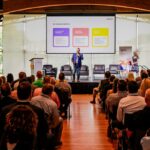
Speaking at a roadshow for the Campaign for Social Science in Keele on 24 October, Sir Howard said there were two areas where “we have some reasons to be anxious.”
One was “the impact of the fees regime on demand for social science subjects – there was a marked decline in demand for admissions to many social science subjects last year, and humanities subjects as well, and that is a concern and underlies the need to make the case much more widely than just within the academic community. ”
The second was the shift from ‘responsive mode’ grants, given to single researchers by research councils, to “large-scale multi-disciplinary, programmatic, top-down, specified forms of funding” on themes such as climate change, sustainability, security and public health.
Sir Howard said that “the danger is that sometimes the role assigned to the social scientists in these circumstances is what I call ‘under-labourer’ one – science and technology change the world and social scientists come along to lubricate the public acceptability of certain scientific and technical changes.
“It takes quite a long time to wean some elements of the science community off that approach to social science.”
However, the funding shift was “a big opportunity for social science, and many science and engineering colleagues do genuinely wish to collaborate with the social science community to address contemporary problems which don’t present themselves bundled up into 19th century discrete categories.”
Sir Howard, who is President of the Academy of Social Sciences, which launched the Campaign, gave as an example of success the Strategic Advisory Committee for the Rural Economy and Land Use Programme, which he chaired, and which had brought scientists and social scientists together successfully.
He said the Campaign for Social Science had been launched because “we felt the profile of the social sciences could be raised not least with government and more generally in the policy environment, but also to instil more of a sense of self- confidence in the social science community itself both inside the academic world and outside.
“There is nevertheless a lot of opportunity for social science,” he said, and it would need to make a “strenuous” case for its value. He told the audience that “we need you behind us” in order to campaign effectively.
Ceridwen Roberts, a Campaign board member, said that social science was under-represented in the senior levels of government and that was why the Campaign was arguing for the restoration of the Government Chief Social Scientist post, which was removed in 2010.
Social scientists were “not visible enough to politicians” and were “not giving enough evidence to Select Committees” in the way that pressure groups did. However the Academy of Social Science and the learned societies were now doing more in this area.
The Campaign was setting up a media database because social scientists did not figure in the media as much as they ought to, she said. “We’ve got to get much better at showing that we are ready to speak on social science issues and have people who are competent and authoritative.”
She said that aims for the Campaign included trying to ensure that there were enough British students studying social sciences at post-graduate level, and making sure that large-scale surveys, such as the national census, were not abolished.
Stephen Anderson, the Campaign Director, thanked Keele University for its support of the Campaign.
He said that the Campaign had developed a relationship with government and was now a trusted resource, giving advice and recommendation to several government departments.
It also organised conferences and other events, such as the roadshows, which were set up to encourage support and to bring people from different disciplines together.
The Campaign had no government funding but instead had support from six publishers, 22 learned societies and 32 universities.
It also produced the Making the Case series of booklets giving examples of how social science research had helped society and influenced policy. Booklets on Scottish research, mental wellbeing and public health were due out soon.
The event was introduced and co-organised by Professor Fiona Cownie at Keele.
The university’s Vice-Chancellor, Professor Nick Foskett, spoke at the event.
“I’m very supportive of the actions we can take to promote the social sciences,” he said. “I’m a social scientist by background and believe passionately in the role of social science in higher education. Keele is keen to underline that importance and to support the Campaign.”
Read Related Articles
Campaign for Social Science Roadshows
Rejoinder to Gary Guttings Doubts about the Behavioral Sciences