

Could Distributed Peer Review Better Decide Grant Funding?
The landscape of academic grant funding is notoriously competitive and plagued by lengthy, bureaucratic processes, exacerbated by difficulties in finding willing reviewers. Distributed […]


The report ” Librarian Futures: Charting Librarian–Patron Behaviors and Relationships in the Networked Digital Age,” follows from a survey of 4,000 librarians and patrons and synthesizes those survey results with usage data from Lean Library, data from a range of librarian and library stakeholder interviews, and contributions from partners scite, Springshare, OpenAthens and OCLC.

Texas A&M’s Sarah Dennis surveyed librarians and their conference -going thoughts with an aim is to find “multiple ways to make conferences better for everyone, in-person or virtually.”
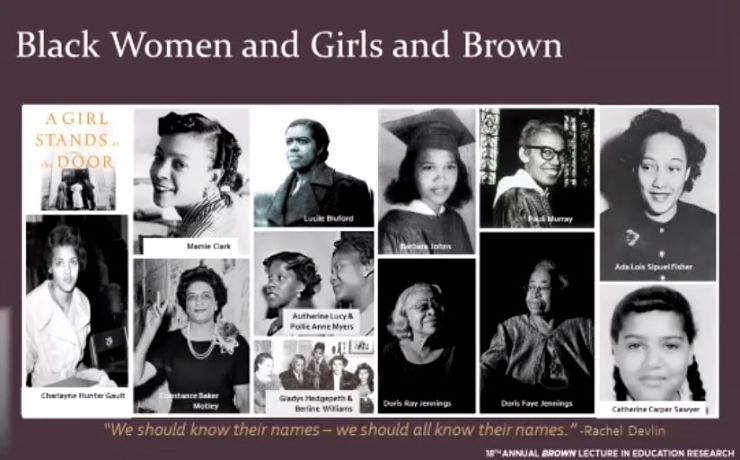
In a lecture on the 67th anniversary of the Brown decision , Lori Patton Davis argued that while there are small victories to celebrate on an arduous mountain climb, but don’t mistake those small crests as the equivalent to reaching the peak.

SEAN, the Societal Experts Action Network, taps scientists in the social, behavioral and economic sciences to provide actionable and evidence-based recommendations to support local, state, and national responses and policies quickly.
Academic social and behavioral science, when it looks outside of the ivory tower, often focuses on policy implications and thus government and […]

William T. Riley, the director of the Office of Behavioral and Social Science Research at the National Institutes of Health, announced he would retire at the end of December

A new blue-ribbon council convened by the United States’ National Academies of Sciences, Engineering, and Medicine aims to tackle questions about nettlesome issues like conflict of interest, measuring impact and handling retractions.
Thirty new members, including two social scientists, have been named to the science advisory body that is officially tasked with giving counsel […]

The Royal Swedish Academy of Sciences has awarded this year’s Nobel Prize in Economic Sciences to the American economists Robert E. Hall […] Four Americans working in the social and behavioral sciences are among the 20 people named MacArthur Fellows this year. Recipients may be […] Euan Adie, the founder of Altmetric and later of Overton, discusses the reasons the led to Overton’s focus on showing researchers how […] The following is an adapted extract from The Cultural Industries, fifth edition, by David Hesmondhalgh. The increasing presence of information technology (IT) […] Developers of AI data centers have a public trust problem. According to multiple surveys, a majority of Americans say they would oppose […] I was adding some final flourishes on the topic of ‘iatrocracy’ to my forthcoming book with Natewindé Sawadogo – Sickness and Social […]
EXPLORE
Impact
Economic Peaks, Troughs and This Year’s Nobelists in Economics
READ MORE

Four From Social Science World Receive 2026 MacArthur Fellowships
READ MORE

Quick Insight: Euan Adie on Getting Academics Credit for Their Impact
READ MORE
Innovation
IT Giants and Their Operations: Should We Be Concerned?
READ MORE

What We Miss When We Study Public Trust with Surveys Alone
READ MORE

AI and ‘Iatrocracy’ – A Cautionary Tale
READ MORE












































































