


Could Distributed Peer Review Better Decide Grant Funding?
The landscape of academic grant funding is notoriously competitive and plagued by lengthy, bureaucratic processes, exacerbated by difficulties in finding willing reviewers. Distributed […]

In recent years, sociology has begun a twin global and decolonial turn, marked by a series of high-profile publications that have sought to engage with sociology’s roots outside the Global Northwest. So how effective have these efforts been?

Turnitin and similar programs don’t deal with the causes of plagiarism. Rather, argue Amanda Mphahlele and Sioux McKenna, they allow institutions to claim they’re doing something without really tackling the issues that lead students to plagiarize.

Daniel Nehring describes China’s social networking platform WeChat as ‘Facebook on steroids,’ and notes it has long surpassed e-mail as the main tool of mediating communication at Chinese universities while obliterating boundaries between work and home. Is this a cautionary tale for academe outside of China?
In the wake of Brexit, Robert Dingwall asks a series of probing questions about the eclipse of Conservative Social Thought at universities, such as when did the social sciences last have a serious engagement with the institutions of the bourgeoisie, even though by income and status many of us would belong to that class?

Plan S focuses on making all publicly funded research immediately fully and freely available by open access publication. If Australia does not adopt Plan S, the authors argue, it could potentially restrict collaboration, publishing, and funding opportunities with research bodies who subscribe to this ambitious movement.
The U.S. military’s innovation incubator, the Defense Advanced Research Projects Agency, has signed the Center for Open Science to create a research claims database as DARPA’s first step to assign a ‘credibility score’ to social and behavioral science research.
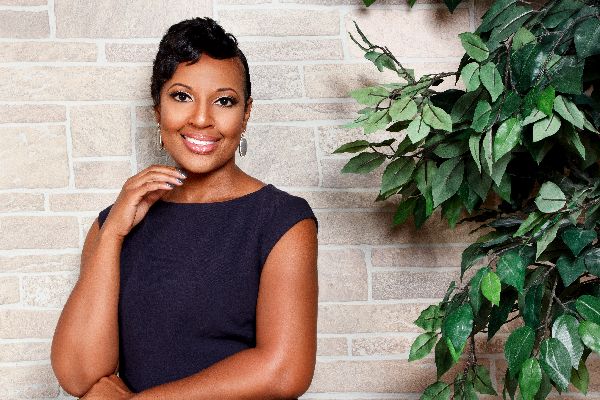
JeffriAnne Wilder, a sociologist and leading scholar specializing in diversity, race relations and women’s empowerment, has almost two decades of experience in higher education. In this interview, she details who influenced — from her mom to bell hooks — and why she left her tenured professorship to work for a non-profit.

The roots of sociology lie among a group of engaged, engaging and vibrant people who often risked their well-being, or even their lives, to advance their ideas. So what happened to suck much of the life out of the discipline?

The Royal Swedish Academy of Sciences has awarded this year’s Nobel Prize in Economic Sciences to the American economists Robert E. Hall […] Four Americans working in the social and behavioral sciences are among the 20 people named MacArthur Fellows this year. Recipients may be […] Euan Adie, the founder of Altmetric and later of Overton, discusses the reasons the led to Overton’s focus on showing researchers how […] The following is an adapted extract from The Cultural Industries, fifth edition, by David Hesmondhalgh. The increasing presence of information technology (IT) […] Developers of AI data centers have a public trust problem. According to multiple surveys, a majority of Americans say they would oppose […] I was adding some final flourishes on the topic of ‘iatrocracy’ to my forthcoming book with Natewindé Sawadogo – Sickness and Social […]
EXPLORE
Impact

Economic Peaks, Troughs and This Year’s Nobelists in Economics
READ MORE
Four From Social Science World Receive 2026 MacArthur Fellowships
READ MORE

Quick Insight: Euan Adie on Getting Academics Credit for Their Impact
READ MORE
Innovation

IT Giants and Their Operations: Should We Be Concerned?
READ MORE

What We Miss When We Study Public Trust with Surveys Alone
READ MORE

AI and ‘Iatrocracy’ – A Cautionary Tale
READ MORE