



Could Distributed Peer Review Better Decide Grant Funding?
The landscape of academic grant funding is notoriously competitive and plagued by lengthy, bureaucratic processes, exacerbated by difficulties in finding willing reviewers. Distributed […]

The recent brouhaha involving the BBC and the singer points out something the journalists and qualitative researchers share: the need to develop a common approach to the ethics of interviewing.

Academia has become increasingly reliant on third-party tools and technologies to carry out research processes. Andy Tattersall suggests a series of straightforward questions researchers should ask themselves before choosing a new technology for use in their research.

Graduate research candidates are the powerhouse of research in universities, yet many have reported feelings of isolation, burnout, and career uncertainty. Karen Barry reports on a study of Australian research candidates which found that increasing numbers are suffering from heightened levels of depression, anxiety, and stress, often citing reasons related to academia’s general work processes, such as writing or publishing research or maintaining motivation while working alone on a single topic.

David Canter reviews results of studies on the challenges of sustaining natural resources.
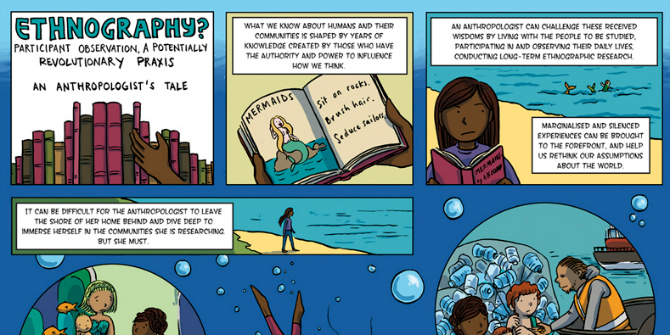
Publishing research that can be accessed as widely as possible is clearly crucial, but ensuring that research is accessible to similarly large groups of people is an altogether different challenge. Lucy Lambe explains how the LSE Library has worked with a comics creator and illustrator to create illustrated abstracts of articles that were funded to publish open access last year.

Facebook CEO Mark Zuckerberg recently acknowledged his company’s responsibility in helping create the enormous amount of fake news that plagued the 2016 election – after earlier denials. Yet he offered no concrete details on what Facebook could do about it. Fortunately, there’s a way to fight fake news that already exists and has behavioral science on its side: the Pro-Truth Pledge project.

One of the largest meta-analysis conducted in the social sciences: asks what the relationship is between who you are (i.e., personality), your work enjoyment (i.e., job satisfaction) and your happiness (i.e., life satisfaction) to find out whether we need to be happy at work to be happy life. That’s not all it found out.
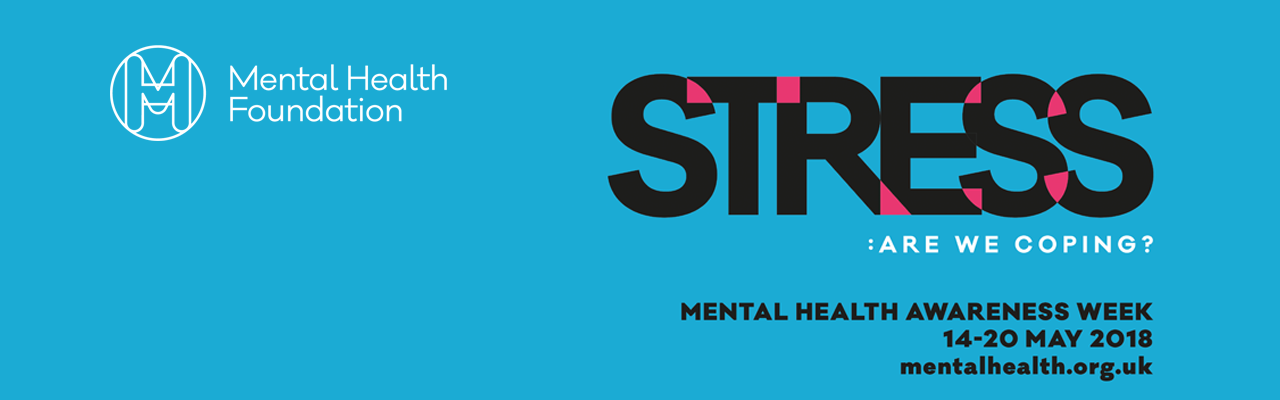
In the latest of its monthly series of interdisciplinary microsites addressing important public issues, SAGE Publishing today is offering free access to academic articles that support Mental Health Awareness Week. The week, sponsored by Britain’s Mental Health Foundation, this year is focused on stress (“Are we coping?”), which the collection covers along with the causes, diagnosis, experiences and treatment of mental illness, are the content areas represented in the collection.
The Royal Swedish Academy of Sciences has awarded this year’s Nobel Prize in Economic Sciences to the American economists Robert E. Hall […] Four Americans working in the social and behavioral sciences are among the 20 people named MacArthur Fellows this year. Recipients may be […] Euan Adie, the founder of Altmetric and later of Overton, discusses the reasons the led to Overton’s focus on showing researchers how […] The following is an adapted extract from The Cultural Industries, fifth edition, by David Hesmondhalgh. The increasing presence of information technology (IT) […] Developers of AI data centers have a public trust problem. According to multiple surveys, a majority of Americans say they would oppose […] I was adding some final flourishes on the topic of ‘iatrocracy’ to my forthcoming book with Natewindé Sawadogo – Sickness and Social […]
EXPLORE
Impact

Economic Peaks, Troughs and This Year’s Nobelists in Economics
READ MORE
Four From Social Science World Receive 2026 MacArthur Fellowships
READ MORE
Quick Insight: Euan Adie on Getting Academics Credit for Their Impact
READ MORE
Innovation

IT Giants and Their Operations: Should We Be Concerned?
READ MORE

What We Miss When We Study Public Trust with Surveys Alone
READ MORE

AI and ‘Iatrocracy’ – A Cautionary Tale
READ MORE