




Could Distributed Peer Review Better Decide Grant Funding?
The landscape of academic grant funding is notoriously competitive and plagued by lengthy, bureaucratic processes, exacerbated by difficulties in finding willing reviewers. Distributed […]

Do sociology graduate students need to publish more today than they did a generation ago to get a faculty position? Do assistant professors need to publish more to get tenure?

When her college started requiring students to complete an internship in order to graduate, it created a serious dilemma for Janelle.
“I wouldn’t be able to do classes, do the internship and work to make money – which is kind of important because I’m basically just paying for school as I can,” Janelle said in an interview for a study of internships during her junior year in South Carolina…

Using bibliometrics to measure and assess researchers has become increasingly common, but does implementing these policies therefore devalue the metrics they are based on? Here researchers present evidence from a study of Italian researchers revealing how the introduction of bibliometric targets has changed the way Italian academics cite and use the work of their colleagues.

Peer review is integral to the award of funds for academic research. Lambros Roumbanis argues that randomly awarding research funding via lotteries presents a more rational, efficient and most importantly unbiased means of distributing research funding.

The Journal of Health Psychology has led the charge into reviewing the published work of the late Hans Eysenck, and the editor of that journal, David F. Marks, and historian of psychology Roderick D. Buchanan, note the detritus of a Kings College London inquiry — 61 retractions for Eysenck’s work so far — and argue the case spotlights the need for a new body to ensure future research integrity.

The gig economy is characterized by contract, freelance, or short-term work engagements with employers who do not provide benefits beyond the immediate payment. This type of transactional employment is becoming more common in academia. What does this mean for research?
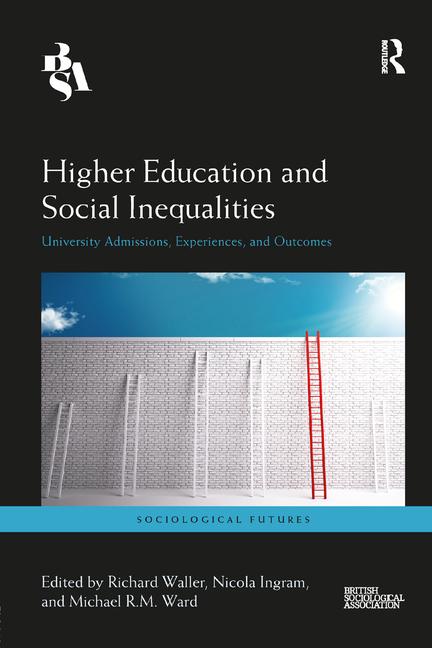
The higher education system rests on the principle of meritocracy, with entry into the ‘top’ Russell Group universities supposedly the product of ability. This is despite growing attention to the over-representation of independent school students studying at the ‘top’ universities, with state school students and disadvantaged groups less likely to secure admission.

Universities in effect, argues our Robert Dingwall, are asked to exercise all the responsibilities of parents and to act as a secular equivalent of the medieval church as the conscience of the nation.

The Royal Swedish Academy of Sciences has awarded this year’s Nobel Prize in Economic Sciences to the American economists Robert E. Hall […] Four Americans working in the social and behavioral sciences are among the 20 people named MacArthur Fellows this year. Recipients may be […] Euan Adie, the founder of Altmetric and later of Overton, discusses the reasons the led to Overton’s focus on showing researchers how […] The following is an adapted extract from The Cultural Industries, fifth edition, by David Hesmondhalgh. The increasing presence of information technology (IT) […] Developers of AI data centers have a public trust problem. According to multiple surveys, a majority of Americans say they would oppose […] I was adding some final flourishes on the topic of ‘iatrocracy’ to my forthcoming book with Natewindé Sawadogo – Sickness and Social […]
EXPLORE
Impact

Economic Peaks, Troughs and This Year’s Nobelists in Economics
READ MORE
Four From Social Science World Receive 2026 MacArthur Fellowships
READ MORE

Quick Insight: Euan Adie on Getting Academics Credit for Their Impact
READ MORE
Innovation

IT Giants and Their Operations: Should We Be Concerned?
READ MORE

What We Miss When We Study Public Trust with Surveys Alone
READ MORE

AI and ‘Iatrocracy’ – A Cautionary Tale
READ MORE