

Could Distributed Peer Review Better Decide Grant Funding?
The landscape of academic grant funding is notoriously competitive and plagued by lengthy, bureaucratic processes, exacerbated by difficulties in finding willing reviewers. Distributed […]
in our debut cross-posting with Viva Voce Podcasts, Simon Chin-Yee describes his research studying how the political network in Kenya interacts with the changes wrought by climate change.

Viva Voce is a website platform that allows social science researchers to set up five minute podcasts about their research.
Gemma Sou argues podcasts are an ideal medium for early career researchers as social media tend to mirror the academic environment, with CV-like publication lists and stratified networks. By literally giving researchers a voice, findings can be brought to life and a more level playing field for researchers can be established.

Amiera Sawas writes here on her experiences with risks in the field and beyond, finding that institutional protocols are undoubtedly robust on a wide range of physical threats, but more subtle threats, like sexual harassment, which cross psychological and physical lines, are not always explicitly dealt with.
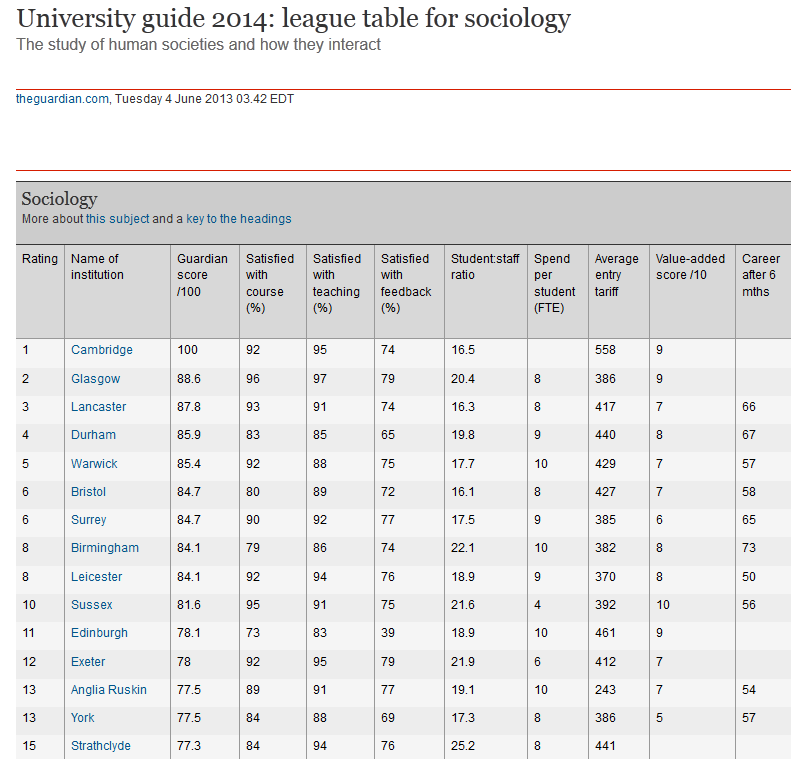
Why does it matter whether you study or work at the sociology department that comes first, 12th or 89th in a ranking? Why does it matter whether the journal you publish in is included and ranked in a certain index, or not? Let us know your thoughts.
Nick Shockey highlights OpenCon, a conference to take place in November aimed at mobilizing support around open access, open educational resources and open data among early career researchers. Funding has been made available to cover travel to attend the conference in Washington, D.C. but the deadline is Monday.

Raising the drumbeat of alarm before a final European Parliament ruling later this year, a coalition of the continent’s research organizations have made explicit their opposition to new rules that they say would impede social science and medical research.

A study of the 100 top journals in education research found that there’s still almost no effort made to replicate the findings they publish.

Very, very little science makes its way to the public eye, and an even smaller amount of that makes an impact. Entrepreneurial scientist Robert Seigel is offering a way around the gatekeepers of knowledge.

The Royal Swedish Academy of Sciences has awarded this year’s Nobel Prize in Economic Sciences to the American economists Robert E. Hall […] Four Americans working in the social and behavioral sciences are among the 20 people named MacArthur Fellows this year. Recipients may be […] Euan Adie, the founder of Altmetric and later of Overton, discusses the reasons the led to Overton’s focus on showing researchers how […] The following is an adapted extract from The Cultural Industries, fifth edition, by David Hesmondhalgh. The increasing presence of information technology (IT) […] Developers of AI data centers have a public trust problem. According to multiple surveys, a majority of Americans say they would oppose […] I was adding some final flourishes on the topic of ‘iatrocracy’ to my forthcoming book with Natewindé Sawadogo – Sickness and Social […]
EXPLORE
Impact

Economic Peaks, Troughs and This Year’s Nobelists in Economics
READ MORE
Four From Social Science World Receive 2026 MacArthur Fellowships
READ MORE

Quick Insight: Euan Adie on Getting Academics Credit for Their Impact
READ MORE
Innovation

IT Giants and Their Operations: Should We Be Concerned?
READ MORE

What We Miss When We Study Public Trust with Surveys Alone
READ MORE

AI and ‘Iatrocracy’ – A Cautionary Tale
READ MORE