


Could Distributed Peer Review Better Decide Grant Funding?
The landscape of academic grant funding is notoriously competitive and plagued by lengthy, bureaucratic processes, exacerbated by difficulties in finding willing reviewers. Distributed […]

How does the experience of impermanent, precarious employment on the margins of academia affect young scholars’ ability to engage in creative labor? Is such creative labor still possible?
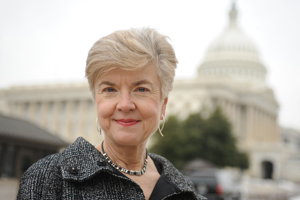
Northwestern University social policy professor Fay Lomax Cook, the longtime head of the Institute for Policy Research, has been appointed to head the National Science Foundation’s Directorate for Social, Behavioral &; Economic Sciences.

An informative title for an article or chapter maximizes the likelihood that your audience correctly remembers enough about your arguments to re-discover what they are looking for. Without embedded cues, your work will sit undisturbed on other scholars’ PDF libraries, or languish unread among hundreds of millions of other documents on the Web. That must be what what we want, based on on what we do.
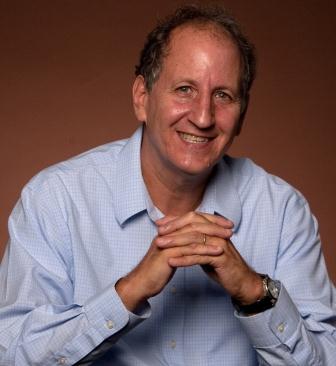
The American Educational Research Association, the nation’s largest professional organization devoted to the scientific study of education, has named three professors from […]

Where should we draw the line between normal data gathering about university students–with the intent of helping them, of course–and outright intrusiveness?

The story of a young German academic who followed the agreed-upon career path only to find the roadsigns don’t always lead to where they indicate.

After two years at the helm of Index on Censorship, Chief Executive Kirsty Hughes will be leaving the leading international freedom of […]

University professors are not immune to epic fails when using social media. But the lesson learned isn’t to withdraw completely, argues Ereika Darics, but to know thine audience.

The Royal Swedish Academy of Sciences has awarded this year’s Nobel Prize in Economic Sciences to the American economists Robert E. Hall […] Four Americans working in the social and behavioral sciences are among the 20 people named MacArthur Fellows this year. Recipients may be […] Euan Adie, the founder of Altmetric and later of Overton, discusses the reasons the led to Overton’s focus on showing researchers how […] The following is an adapted extract from The Cultural Industries, fifth edition, by David Hesmondhalgh. The increasing presence of information technology (IT) […] Developers of AI data centers have a public trust problem. According to multiple surveys, a majority of Americans say they would oppose […] I was adding some final flourishes on the topic of ‘iatrocracy’ to my forthcoming book with Natewindé Sawadogo – Sickness and Social […]
EXPLORE
Impact
Economic Peaks, Troughs and This Year’s Nobelists in Economics
READ MORE
Four From Social Science World Receive 2026 MacArthur Fellowships
READ MORE

Quick Insight: Euan Adie on Getting Academics Credit for Their Impact
READ MORE
Innovation
IT Giants and Their Operations: Should We Be Concerned?
READ MORE

What We Miss When We Study Public Trust with Surveys Alone
READ MORE

AI and ‘Iatrocracy’ – A Cautionary Tale
READ MORE