


Could Distributed Peer Review Better Decide Grant Funding?
The landscape of academic grant funding is notoriously competitive and plagued by lengthy, bureaucratic processes, exacerbated by difficulties in finding willing reviewers. Distributed […]

Management is a fairly recent social science, but for a number of reasons, academics in this field are particularly challenged by students, peers and fellow social scientists. But with experience, management scholars can succeed in showing the contribution that social science can make to educating business students.

Ambalavener Sivanandan, a former bank manager and then librarian who became an award-winning novelist and one of Britain’s foremost political thinkers on race, will be honored this Saturday at London’s Red Lion Square.

#SAGETalks returns with the third installment of the FREE SAGE Ocean Speaker Series on June 11th in London at 6pm. Keith Porcaro, fellow at Harvard’s Berkman Klein Center, will present his work on data trusts, a legal tool for governing and protecting digital movements.
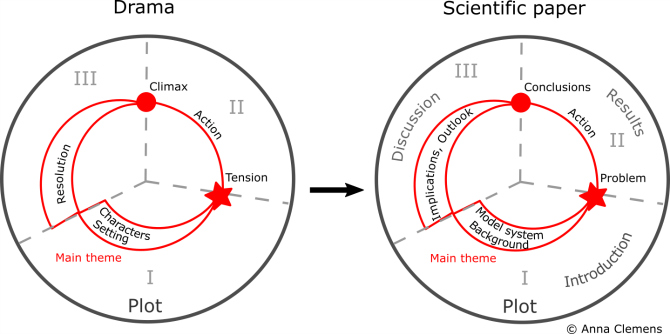
People love stories. We watch, read, tell, and listen to stories every day. Despite this, most researchers don’t think in terms of story when they write a journal paper. To Anna Clemens, that’s a missed opportunity, that she helps solve so that we may be ready to write a paper that is concise, compelling, and easy to understand.
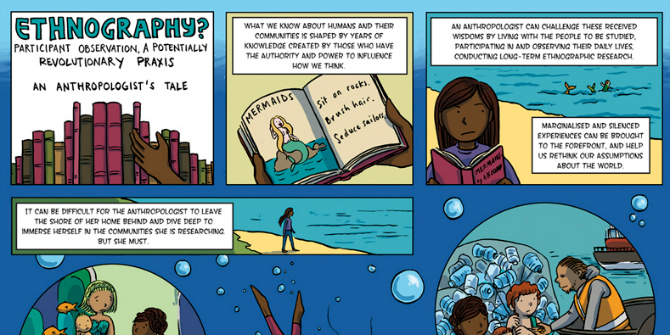
Publishing research that can be accessed as widely as possible is clearly crucial, but ensuring that research is accessible to similarly large groups of people is an altogether different challenge. Lucy Lambe explains how the LSE Library has worked with a comics creator and illustrator to create illustrated abstracts of articles that were funded to publish open access last year.
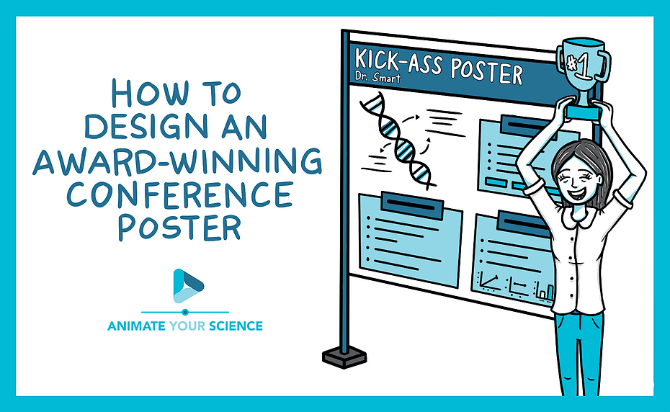
A good academic conference poster serves a dual purpose: it is both an effective networking tool and a way to communicate your research. But many academics fail to produce a truly visually arresting conference poster which make connections are lost. Tullio Rossi offers guidance on how to produce an outstanding conference poster.
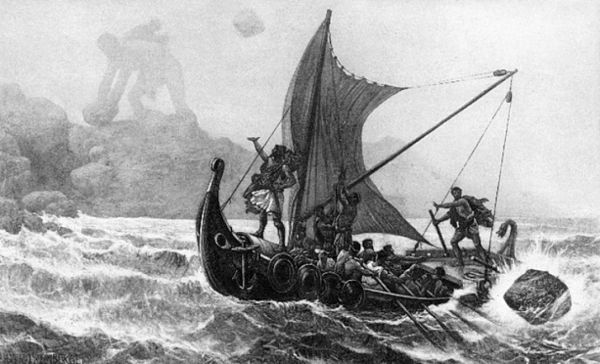
Centuries ago, myths helped the Greeks learn to reject tyrannical authority and identify the qualities of good leadership. Emily Anhalt argues that the same myths that long predate the world’s very first democracy have lessons for us today – just as they did for the ancient Greeks centuries ago.

CASBS at Stanford University and SAGE Publishing are announcing nominations to the fifth annual SAGE-CASBS awards. The award goes to researchers who have made outstanding societal contributions by using social and behavioral research to address or understand vital social concerns.

Euan Adie, the founder of Altmetric and later of Overton, discusses the reasons the led to Overton’s focus on showing researchers how […] Here’s a couple of quick questions for you. What is the smallest of the eight discipline-based directorates at the United States’ National […] Sage’s 10-Year Impact Awards recognize academic papers appearing in Sage-published journals that have achieved lasting impact. The winning papers are the most […] I was adding some final flourishes on the topic of ‘iatrocracy’ to my forthcoming book with Natewindé Sawadogo – Sickness and Social […] How is AI changing the shape and space of higher education? Critical thinking continues to rank highly among key skills and attributes […] My colleagues and I recently spoke with a group of talented, interesting students who just completed their first year of college about […]
EXPLORE
Impact

Quick Insight: Euan Adie on Getting Academics Credit for Their Impact
READ MORE

NSF’s Embattled SBE Directorate Shown as Agency’s Policy Heavyweight
READ MORE

Sage’s 10-Year Impact Awards Capture Longer-Term Significance
READ MORE
Innovation

AI and ‘Iatrocracy’ – A Cautionary Tale
READ MORE

The Critical Student: How GenAI Reshapes Critical Skills and Higher Education’s Role Preparing Students For It
READ MORE

AI Doesn’t Drive Student Cheating. It Just Hitches a Ride
READ MORE